

Blog
Live Event Production Company: How to Evaluate the Right Partner for Your Event
Posted By Tallen | August 21, 2026
Choosing the right live event production company is about more than comparing equipment lists and pricing. Whether you’re planning an event for a few hundred attendees or several thousand, the right production partner should bring the experience, technical expertise, and flexibility to support your goals from the earliest planning stages through show day.
Every event has different needs. A nonprofit or association meeting may call for a streamlined production approach, while a large-scale enterprise event may include custom scenic elements, complex content, multiple rooms, or enhanced production features. A strong partner understands how to scale the team, technology, and creative approach appropriately for each program.
At Tallen, we’ve spent more than 20 years supporting events across that spectrum, helping clients create thoughtful, well-executed experiences without making the production process more complicated than it needs to be.
What a Live Event Production Company Delivers
Full-service event production brings the creative, technical, and operational pieces of an event together through one coordinated team.
Depending on the program, that can include creative direction, scenic design and build, technical planning, audio, video, lighting, content support, onsite execution, and post-event services.
The benefit of an integrated approach isn’t simply having everything under one roof. It’s having teams that understand how each element of the event connects to the others.
General sessions may require high-quality video, audio, lighting, and presentation support. Breakouts need consistency across multiple rooms. Executive meetings may call for a more intimate environment and a highly responsive onsite team. Large-scale events may combine all of those needs within the same program.
An experienced live event production company helps bring those pieces together while keeping the production approach aligned with the event’s goals, audience, and budget.
Experience That Scales With Your Event
When evaluating production partners, look beyond the size of the company or the equipment they own. What matters most is whether the team has experience delivering events with a range of audiences, environments, and production requirements.
That can mean supporting a nonprofit leadership meeting for several hundred attendees one week and a large enterprise event for several thousand the next.
It can also mean adapting to very different production needs. Some programs require a clean, efficient technical setup. Others include large-format video, immersive lighting, custom scenic environments, multiple concurrent spaces, or complex presentation content.
The best full-service AV production companies for conferences and live events understand how to right-size the solution instead of applying the same production model to every client.
Tallen team members bring extensive event experience to that process, and since 2002, our teams have supported more than 100,000 events worldwide. That depth of experience helps us anticipate needs, adapt quickly, and build production plans around each program.
Questions to Ask During Discovery
A productive discovery conversation should be just that: a conversation.
Before recommending equipment or building a production plan, a strong partner should take time to understand the event itself. That includes the audience, program format, venue, executive expectations, creative goals, past event history, and any areas where the planning team would benefit from additional support.
Useful questions to discuss with a potential production partner include:
- How do you approach pre-production planning and site surveys?
- How do you determine the right production approach for an event’s size and goals?
- How do you staff general sessions, breakouts, and executive programs?
- What level of technical redundancy do you typically build into audio, video, and streaming systems?
- How do you collaborate with venues, agencies, planners, and other event partners?
- How do you manage changes or additions as the event evolves?
- Can you share examples of events with similar audiences or production requirements?
The answers should give you a sense not only of technical capability, but also of how the team communicates and collaborates throughout the process.
What a Strong Production Partnership Looks Like
The best production relationships are built around communication, flexibility, and shared ownership of the event experience.
That starts during pre-production. A strong team asks the right questions early, identifies priorities, and develops a technical plan that supports the creative vision rather than competing with it.
As planning continues, that partner should be able to adapt. Event agendas change. Content evolves. Room configurations shift. New ideas emerge.
An experienced production company understands that flexibility is part of the process and helps clients evaluate those changes thoughtfully.
Just as important, the production team should be comfortable working alongside the other people involved in the event, whether that’s an internal events team, association staff, agency partners, venue teams, presenters, or other creative and technical vendors.
Good production should feel coordinated, not fragmented.
What Best-in-Class Production Looks Like Onsite
Show day is where months of planning come together.
Strong onsite teams arrive with a clear understanding of the program, detailed production documentation, defined roles, and a shared plan for how each part of the event will operate.
Audio, video, lighting, scenic, and content shouldn’t function as separate technical departments. They should work together to support the same attendee experience.
For a smaller meeting, that might mean creating a polished environment with an efficient production footprint. For a larger event, it could involve multiple stages, breakout rooms, custom scenic elements, large-format displays, broadcast or streaming components, and coordinated show teams working across the venue.
Our full-service event experiences are built around that integrated approach. We work with clients to determine the right level of production for the program in front of us, then support it from planning through execution.
Choose a Live Event Production Company That Fits Your Program
There isn’t one definition of a successful event, and there shouldn’t be one definition of the production approach behind it.
The right partner understands how to scale.
That means bringing the appropriate people, technology, creative thinking, and technical expertise to an association meeting for a few hundred attendees just as thoughtfully as to an enterprise event for several thousand.
After more than 20 years in live event production, we’ve learned that great production isn’t about adding complexity. It’s about helping everything work together.
If you’re planning an upcoming event, reach out to our team to start a conversation about the experience you want to create.
Hybrid Event Production: What 10+ Years of Experience Has Taught Us About Reliability
Posted By Tallen | August 11, 2026
Hybrid events have matured into complex, multi-audience experiences. Today’s hybrid event production blends in-person energy with remote engagement, and the reliability of the experience depends on the systems and expertise behind every stream. Over the past decade, Tallen has grown into a trusted hybrid event production agency delivering these events across the country. Here is what that experience has taught us about building reliability into every one.
What Reliable Hybrid Event Production Actually Looks Like
Reliable hybrid production starts long before the first speaker takes the stage. It’s built on redundant streaming infrastructure, backup encoders, dedicated internet lines, and pre-tested platform connections that remove single points of failure. Every piece of equipment has a backup, every internet connection has a failover, and every technical role has a second set of eyes ready to step in. Behind every polished hybrid experience is a team that has tested every detail, mapped every signal path, and prepared for the scenarios most planners never see. That level of preparation is what makes an event truly reliable.
Preparation also means flexible platform delivery. A great production partner works with your chosen virtual platform, connects with the tools you already use, and delivers a consistent experience no matter the technology involved. Reliability comes down to mastering the fundamentals: clean audio, stable video, synchronized content, and dedicated technical support for both audiences at once.
The Case for a Dedicated Production Agency
A dedicated agency brings something an occasional producer cannot: pattern recognition. After hundreds of events, our team knows the challenges to plan around, the approaches that hold up under pressure, and the moments where a quick decision matters most. That experience means faster problem-solving, smoother coordination between teams, and greater confidence for planners heading into show day.
That depth shapes every decision, from redundancy planning to crew composition to content flow. When you partner with a specialized team, you gain the benefit of practices refined across a decade of live events. Tallen’s hybrid production services reflect these principles across every event we support.
Nationwide Expertise, Consistent at Every Scale
Tallen delivers reliable hybrid event production for high-visibility corporate events across the country. Our team supports convention centers, hotels, and event venues nationwide with the same technical depth, redundancy planning, and flexible platform delivery that defines our work in every market. Clients also benefit from our national inventory, dedicated technical crews, and the ability to scale to any size.
That national reach matters as hybrid production continues to grow and organizations look to connect with teams, partners, and clients wherever they are. Delivering consistently across markets takes deep familiarity with a wide range of venues and the local considerations that keep every event running smoothly. Our experience means the same standard of reliability travels with us, regardless of city, venue, or audience size.
Building a Truly Connected Experience
The best hybrid events treat both audiences as equal participants. That means designing sessions around the remote experience as much as the in-room one, with camera work that keeps virtual attendees engaged, audio that translates cleanly across streaming platforms, and content that stays in sync with what’s shown on screen. It also means giving remote attendees real ways to take part, through live Q&A, polling, chat moderation, and networking that mirrors the room. A team that treats hybrid as a discipline rather than an add-on delivers an experience that feels seamless for everyone.
Reliability also depends on the equipment behind the production. Our full-service event production approach brings together the tools, systems, and technical know-how that keep these events running smoothly. No matter the scale, the same principles apply: prepare thoroughly, build in redundancy, and treat every attendee equally.
“Tallen went above and beyond on a large production with many moving parts. We had a hybrid meeting with 100+ participants and attendees, and Tallen handled it with ease. I couldn’t be more thankful. They will be my preferred vendor, and I can’t offer enough kind words for their attitude, work ethic, and ability to be flexible as the production changed many times. Highly recommend Tallen!!” — Jim Mather
A Decade of Reliability, Built Through Practice
Reliability is a discipline. It’s built on preparation, redundancy, and a commitment to treating every attendee equally, no matter how they join. Ten-plus years of hybrid experience have shaped how we approach every event, and it’s why our clients trust us with events of growing complexity year after year.
If you’re planning a hybrid or virtual event, our team can walk you through the planning, technology, and staffing that make reliability possible. No matter the audience size or where they’re joining from, the same standards apply: consistent redundancy, technical rigor, and genuine care for both in-person and remote guests. See how Tallen has delivered reliable events across industries and venues.
Live Event Audio Visual Production Strategies That Improve Venue Compatibility
Posted By Tallen | July 20, 2026
Every venue has a technical personality. Some ballrooms offer generous rigging capacity and deep power reserves that welcome ambitious stage designs. Others present tight load-in paths, limited circuits, and ceiling restrictions that demand creative problem-solving well before show day. Production teams that learn these details early deliver polished, reliable events—and the planners who work with them gain a level of confidence that shows up on every stage. That confidence starts with a thoughtful approach to live event audio visual production, one that treats every technical discipline as part of a connected system. Strong production for live events depends on getting ahead of venue-specific challenges before they reach the loading dock.
Power Distribution and Rigging: Planning for What the Venue Can Handle
Large LED walls, high-output lighting rigs, and robust audio systems all draw significant power. Many hotel ballrooms and conference centers weren’t originally built to support those loads without supplemental distribution. Understanding available circuits, their locations, and total capacity during pre-production prevents costly surprises like emergency generator rentals or last-minute electrical work onsite.
Rigging follows a similar principle. Venues with strong rigging points can support heavy truss and lighting configurations with ease, while others carry weight restrictions or limited hang points that call for ground-supported alternatives. A production partner with firsthand experience inside a specific venue already knows which approach fits best. That knowledge saves time and budget while keeping the creative vision on track.
How Strong Live Event Audio Visual Production Connects Scenic Design to Room Layout
Scenic elements carry enormous creative weight, but they also have to function within physical constraints. A massive LED display makes a powerful statement on a general session stage, but only if the room’s depth allows proper viewing distances and the floor can support a ground-supported structure of that scale. Sight lines, entry points, camera positions, and audience flow all influence how scenic pieces perform once attendees fill the space.
When scenic planning and room layout analysis happen together early, the result is a design that looks incredible and works flawlessly. When those conversations happen separately, the disconnect surfaces during load-in, when options narrow, and budgets are already committed. Integrated planning eliminates that gap and gives every design decision a stronger technical foundation.
Signal Flow and Connectivity Planning
Behind every seamless presentation is a carefully mapped signal path. Video feeds, audio routing, presenter confidence monitors, recording systems, and streaming outputs all depend on clean signal flow that accounts for cable runs, switching infrastructure, and venue-specific connectivity limitations.
Hotels and convention centers vary widely when it comes to internet bandwidth, hard-line availability, and existing infrastructure. A production partner who is familiar with major U.S. venues understands these variables through experience, not guesswork. That familiarity translates into reliable connectivity for live polling, audience engagement tools, hybrid streaming, and content playback across multiple stages and breakout rooms.
Why Early Collaboration Strengthens Production for Live Events
Strong production for live events depends on planning every discipline as part of one unified system. Audio, video, lighting, scenic, and IT should all inform one another during pre-production so the final plan reflects a cohesive technical approach. When one element shifts, like a last-minute room change, every connected system adapts together instead of scrambling.
Teams identify challenges and build contingency plans early through pre-event site visits, advance calls, and thorough run-of-show development. The result is a calmer load-in, a smoother show day, and a better experience for every attendee.
Nationwide Venue Experience That Powers Every Event
Tallen’s approach to live event audio visual production is built on tens of thousands of productions across top U.S. venues, hotels, and convention centers. Our team has already navigated the rigging limitations, power constraints, and connectivity variables that each venue presents. Our experience includes hotel ballrooms where air walls shift quickly, rooms reconfigure hourly, and our team pre-plans every layout.
Knowing how a venue’s rooms flex throughout a program helps our team plan for transitions before they become onsite challenges. Planners gain a production partner who arrives with solutions in place and delivers reliable production across any market.
When every technical element works together by design, events run seamlessly, confidently, and with every detail accounted for. Explore how Tallen can support your next event.
Corporate Audio Visual: A Buyer’s Guide for Event Planners and Corporate Communications Teams
Posted By Tallen | July 09, 2026
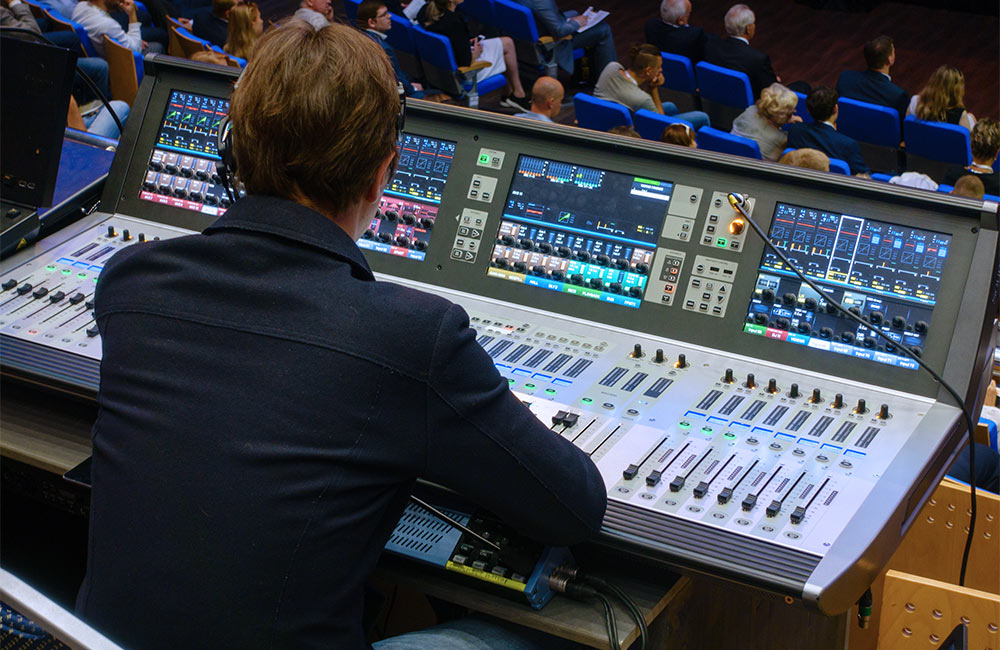
Choosing the right corporate audio visual partner is one of the most significant decisions an event planner or corporate communications team can make. Yet, the process is often rushed or shaped by a single factor like price. Strong corporate meeting audio visual support requires careful evaluation that goes beyond picking the cheapest quote on the table. The right AV production for corporate event programming influences everything—speaker confidence, audience engagement, content delivery, and the impression your company leaves after the event ends. Event technology solutions that align with your goals can transform a standard meeting into a memorable experience, while the wrong choice can drain budget and energy without delivering results.
What to Look for When Evaluating Corporate Audio Visual Partners
The best corporate audio visual decisions are made early, when planners have time to evaluate options thoroughly. Look for partners with proven experience producing the type of event you’re planning, a transparent approach to pricing, and a track record of supporting brands through high-stakes moments. Ask about their team’s average tenure, their venue experience, and pay close mind to the questions they ask you during the discovery conversation. A great partner takes interest in understanding your goals before quoting equipment — a clear signal that they invest in outcomes rather than line items. Strong partners will also share specific examples of past work, walk you through their pre-production process, and explain how they handle change orders, last-minute additions, and unexpected challenges onsite.
The Difference Between AV Rental and Full-Service AV Production for Corporate Event Programs
Many companies confuse equipment rental with full production support, but the two services operate very differently. Renting gear delivers boxes and cables; full-service AV production for corporate event programs delivers an integrated team that designs, plans, executes, and adapts in real time. A rental-only relationship often leaves planners managing logistics across multiple vendors, coordinating technicians independently, and troubleshooting issues without dedicated support. A full production partner handles every layer — creative design, pre-production planning, technical execution, and onsite support — under one roof. For corporate communications teams responsible for high-visibility events, that level of integration is what protects the message and the brand.
Why Staffing and Onsite Support Define Strong Corporate Meeting Audio Visual
Corporate meeting audio visual quality lives or dies in onsite execution. Equipment can be identical across vendors, but the people running it shape everything about how the event feels. Look for partners who staff their events with experienced technicians who specialize in corporate environments rather than freelance generalists. A strong corporate meeting audio visual team brings problem-solving instincts built over years of producing similar events, and they communicate proactively before challenges arise. Consistency matters here too—when the same technicians return for repeat engagements, your brand gains accumulated knowledge that improves every event.
How Scalable Event Technology Solutions Support Long-Term Partnerships
The most successful corporate event programs grow over time, and your AV partner should grow with them. Scalable event technology solutions give you flexibility as programs evolve into regional roadshows, executive dinners, or multi-city training events. Ask potential partners about their nationwide inventory, multi-market experience, and ability to maintain consistent quality across venues. Strong event technology solutions also include pre-production planning processes that prevent surprises and keep budgets aligned with creative ambitions.
Client Testimony:
“I have been working with Tallen for over 12 years now, and love working with them. I never have to worry about things getting done or handholding, as they have it covered. Very professional onsite and gets things done.” —Rachael Duncan
Common Pitfalls to Avoid
The biggest mistakes in AV buying happen when planners rush the process or focus on the wrong criteria. Choosing solely on price often leads to underwhelming results that cost more to fix later, erasing any perceived savings. Skipping reference checks or site walkthroughs leaves planners exposed to unknowns that surface during load-in. Overlooking the importance of pre-production planning can compress timelines until creative options disappear. The strongest buying decisions involve thoughtful evaluation, honest budget conversations, and partner relationships built on trust rather than transactional pricing.
Building a Buying Decision Around What Matters Most
The right AV partner becomes an extension of your team, not a vendor you negotiate with annually. Look for a production company that invests in understanding your goals, brings the technical depth to handle events of any size, and stays consistent across every venue, format, and audience. The most rewarding AV partnerships grow alongside your event program, expanding as your needs evolve. Tallen gives planners and corporate communications teams one partner for events of any size, format, and complexity nationwide. If you’re evaluating corporate audiovisual partners, our team can walk you through what a true production partnership looks like.
Scenic Design for Corporate Events: How In-House Design and Build Sets a Production Apart
Posted By Tallen | June 17, 2026
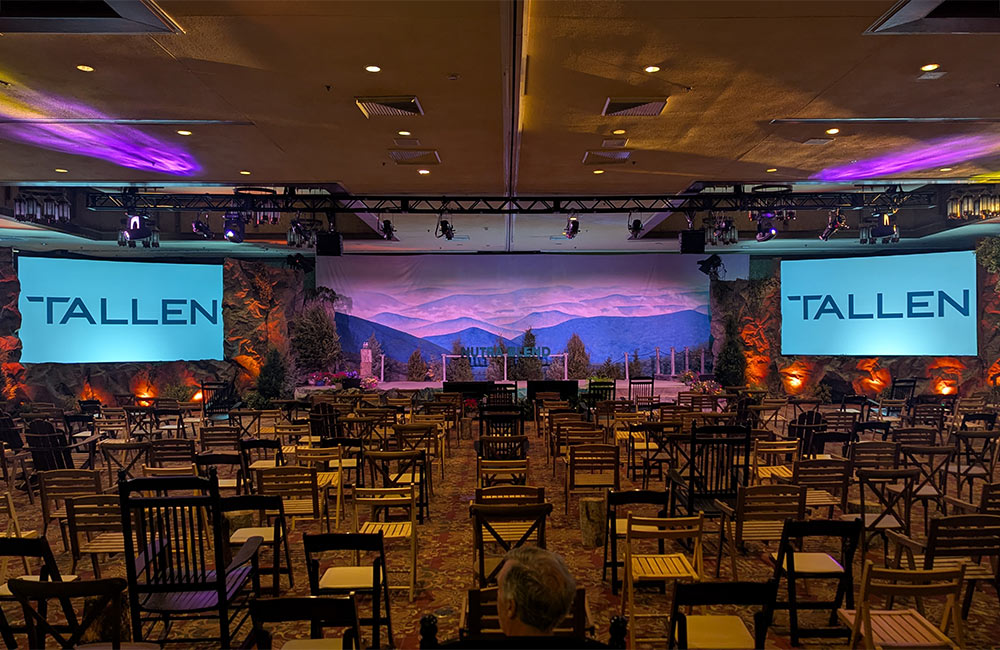
A great corporate event makes an impression before a single word is spoken. The stage, the structures, the visual environment—every detail signals something about the brand, the message, and the level of care behind the experience. Strong scenic design turns a venue into a destination and a presentation into a moment worth remembering. When event stage design, conference set design, and corporate set design all live under one roof with your production partner, the result is a more cohesive, more flexible, and more impactful program for every audience.
The Strategic Role of Scenic Design in Corporate Events
Audiences form impressions quickly, and scenic design shapes those impressions before anyone takes the stage. A well-designed set reinforces brand identity, supports the messaging arc, and creates an environment that helps speakers feel confident and audiences feel engaged. Many planners find that audiences engage more deeply when the visual environment reinforces the content being delivered. A thoughtfully designed stage creates emotional resonance that text and talking points alone can’t achieve. For corporate events, where every program carries strategic weight, the visual environment becomes a creative asset rather than a finishing touch.
How In-House Design Streamlines the Creative Process
When event stage design and production planning happen within the same team, communication moves faster, and ideas evolve more naturally. There’s no need to translate creative direction across multiple vendors or wait for separate teams to align timelines. Designers, technical directors, and production coordinators share the same conversations, the same files, and the same goals. The result is a smoother creative process where decisions move quickly, and design intent stays intact through every revision.
This integrated approach also keeps creative vision and technical execution moving together. When the team designing the set understands the rigging, power, and venue logistics, the event stage design accounts for those realities upfront, giving planners more flexibility to focus on storytelling rather than troubleshooting.
Why Unified Production Teams Elevate Conference Set Design
Conference set design works best when the entire technical environment is planned as one system. Lighting, LED, audio, scenic elements, and content all interact with each other in real time onsite. When one team owns the design and integration of these disciplines, every element supports the others. Lighting angles complement scenic shapes, LED placements align with sight lines, and audio coverage maps cleanly across the room layout. That cohesion comes naturally when conference set design and production live together within the same team.
A unified team also adapts more quickly when plans change. Speaker lineups shift, content evolves, and creative direction sometimes pivots during the final weeks before an event. An integrated production team can adjust scenic elements without disrupting the rest of the program because every discipline already understands how the pieces fit together.
Corporate Set Design That Aligns With Brand and Message
Every corporate set design choice carries brand implications. Color, materials, scale, and structure all influence how an audience perceives the company behind the event. An in-house creative team brings full immersion in the client’s goals, brand standards, and audience expectations, allowing every corporate set design decision to reinforce the broader strategic vision. Consistency matters here, too. When a company hosts multiple events throughout the year—sales kickoffs, executive summits, customer conferences — having a creative team that understands the brand inside and out ensures every set carries the same visual DNA, reinforcing recognition across every audience touchpoint. The result is a set that feels intentional, polished, and unmistakably aligned with the company hosting the program.
Client Testimony:
‘”From stunning lighting and creative set designs to flawless audio, every detail is handled with precision and flair. Our conferences are complex, involving intricate audio and video setups and a 3-day schedule with over 70 speakers. With Tallen, even our budget-conscious events have a high-end, polished look that rivals the best in the industry.’ —Tammy Scholtes
Bringing Design to Life Onsite
A beautifully rendered design is only as powerful as its onsite execution. Translating concept into physical build is where in-house design and build truly proves its value. When design and build live within the same organization, the team responsible for the creative event stage design is the same team installing it, programming the lighting around it, and timing the content reveals it was built to support.
This continuity creates a fully realized event environment, where every element reflects the same vision. Build crews already know what the design team intended. Lighting designers have collaborated with set designers throughout the process. Content teams have aligned their visuals with the physical structures supporting them. By show day, the entire production feels like a single, coherent experience instead of separate parts assembled in one room.
Choose a Partner Who Designs and Builds With Intention
Tallen’s full-service creative team handles design and build alongside every other production discipline. That single-partner model gives planners a streamlined process, a more cohesive creative outcome, and the kind of attention to detail audiences feel the moment they walk into the room. When the people designing your stage are also the people powering it, the result is an event that feels intentional in every direction. When the people designing your stage are also the people powering it, the result is an event that feels intentional in every direction. See how Tallen’s creative team brings scenic design to life, from concept through onsite execution.
5 AV Questions To Ask Before Booking Event Venues in San Diego, CA
Posted By Tallen | June 05, 2026
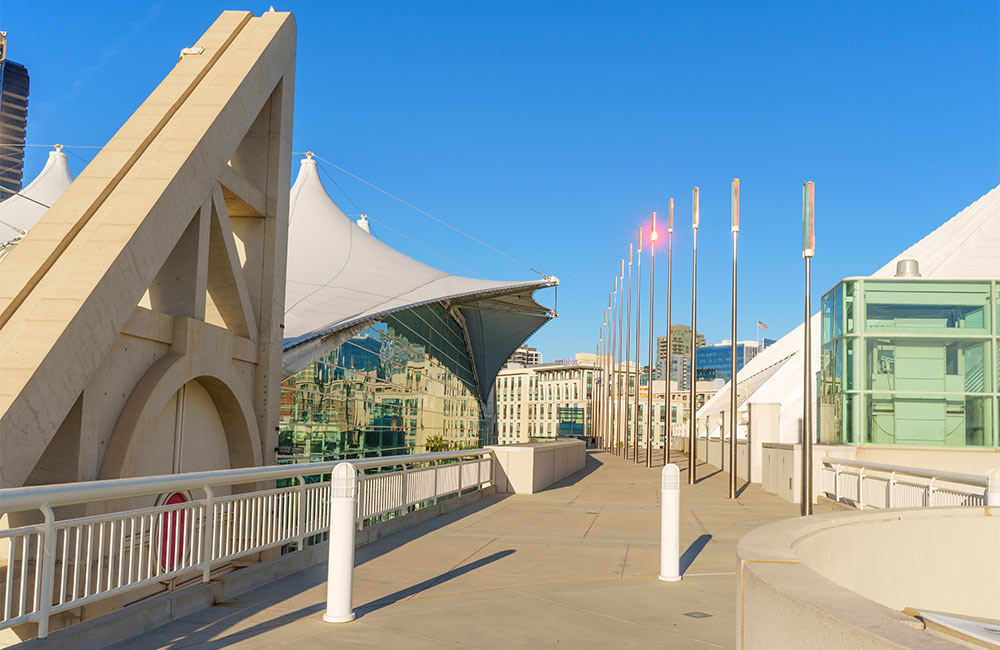
San Diego is one of the most sought-after event destinations on the West Coast, and with good reason. World-class event venues in San Diego, CA, like the Gaylord Pacific Resort & Convention Center, the San Diego Convention Center, the Manchester Grand Hyatt, and Town and Country Resort give planners an impressive range of options for conferences, trade shows, and executive meetings of every size. The coastal setting, reliable weather, and strong hospitality infrastructure make San Diego a natural choice for organizations that return year after year.
But before you sign a venue contract, a handful of AV-related questions can shape your budget, your production quality, and your flexibility on-site. Asking these five questions early prevents surprises and sets every San Diego event up for a seamless production experience.
1. Does the Venue Allow Outside AV Partners?
This is the single most important question to ask before signing anything. Many venues have exclusive or preferred relationships with in-house AV providers, and some contracts include language that limits your ability to bring in a third-party production partner. Understanding these policies upfront protects your ability to choose the team that best fits your event’s creative and technical needs. Generally, when venues say they have an exclusive, you have the flexibility to negotiate and bring in your own partner and bring them in at an early stage.
If a venue does allow outside AV, always ask about a policy / additional fees ahead of time. Some properties charge labor surcharges, power access fees, or equipment handling costs for external providers, all of which can be negotiated. Knowing these numbers early and/or receiving these concessions allows you and your production partner to build an accurate budget without hidden line items appearing later.
2. What Power and Rigging Infrastructure Is Available?
Event venues in San Diego, CA, vary significantly when it comes to electrical capacity and rigging support. A ballroom that works perfectly for a mid-sized meeting may lack the power distribution needed to run a large LED wall, full lighting rig, and robust audio system simultaneously. Asking about available circuits, dedicated power drops, and generator access during the booking process gives your production team the information they need to design within the venue’s capabilities. Room rentals should always come with basic infrastructure such as wall power, but some venues work language into their contract in an effort to charge for these services. Discussing this ahead of time allows you to structure the best contract when securing your event venue.
Rigging is equally important. Some San Diego venues offer strong overhead rigging points that support heavy truss and lighting configurations, while others have weight restrictions that require ground-supported alternatives. Engaging your production partner early in the venue selection process helps you confirm that the space has the infrastructure to support your event’s technical vision and prevents costly design changes.
3. What Are the Venue’s Technical Specifications and Limitations?
Every venue has quirks that affect production. Ceiling heights determine screen and scenic sizing. Column placements impact sight lines and camera positions. Loading dock access and freight elevator dimensions influence how quickly and efficiently equipment moves into the space.
Ask or connect with your AV partner before choosing your event space, and share any diagrams or technical specification packets with your AV partner as early as possible. A production team with experience inside that specific venue can immediately flag potential challenges and recommend solutions, turning technical limitations into design opportunities instead of show-day obstacles.
4. How Does the Venue Handle Internet and Connectivity?
Reliable connectivity is essential for live polling, hybrid streaming, audience engagement platforms, and basic presentation playback. Venue-provided Wi-Fi often serves guest rooms and public areas first, which can leave event bandwidth stretched thin during peak sessions.
Ask about dedicated hard-line internet options, available bandwidth for your event spaces, and any associated costs. Your production partner can then plan signal flow and streaming infrastructure around confirmed connectivity rather than best-case assumptions.
5. Can AV Requirements Be Written Into the Venue Contract?
Contract language matters. Building AV-specific terms into your venue agreement protects your event long after the booking is confirmed. Key items to address include outside AV access, guaranteed power availability, rigging access and costs, and dedicated internet bandwidth.
Working with your production partner during contract review ensures that technical needs are addressed alongside catering minimums and room blocks. This collaborative approach prevents misalignment between what the venue provides and what your event actually requires.
Booking With Confidence Across San Diego
Asking the right AV questions early turns venue selection into a well-informed decision. When planners and production teams align before the contract is signed, planning runs smoother, and budgets go further.
Tallen brings deep experience producing events across San Diego’s top venues, hotels, and convention centers. Our team helps planners navigate these exact questions and build production plans grounded in real venue knowledge. Let’s start planning your next San Diego event together.
We have been working with Tallen for many years, and they are absolutely incredible. Their service and attention to detail have made our events run so smoothly. Chuck is amazing and truly is the backbone of every event we do. Couldn’t do it without him and the team! Can’t recommend Tallen enough.